The luxury fashion market declined, and revenue from clienteling still grew
A strong conversion rate in a strong market proves little. This clienteling case study follows a global fashion brand that grew revenue its associates influenced through Tulip Clienteling, in a period where year-over-year sales declined for the broader business.
Knowing your high-value customers is not the same as reaching them
A global fashion brand’s most valuable customer data relied on the memory and instinct of individual associates and was siloed across systems that didn’t talk to each other.
Relationship knowledge was perishable. Across stores and associates, a customer’s experience depended on who happened to be helping them. When an individual associate left, customer memory left with them.
Customer context was fragmented. Purchase history and preferences sat in systems that were out of reach of the associate on the store floor.
Inconsistent experiences. VIP customers received different levels of attention depending on which associate happened to be working.
Faced with a year-over-year sales decline, the brand needed to understand which customers were worth reaching, put the right context in front of every associate, and turn 1:1 outreach into revenue it could measure.
02
The Solution
How Tulip Clienteling turned existing customer relationships into measurable revenue
Associates using Tulip Clienteling arrive at each interaction knowing which clients are due for outreach, what they have purchased, and what just arrived that fits their profile. The platform surfaces this context at the point of need, so the floor shifts from reactive selling to proactive relationship management, led by the associate and supported by the platform.
With context, purchase history, and a clear next step provided by Tulip, every associate could run the high-quality client interactions that delivered a 14.55% conversion rate for clienteled customers. Even more impactful is the follow-through rate on the associate’s part. The brand’s retail team completed 94.5% of the follow-ups they set, proof the platform tools fit how associates actually work.
59%
conversion rate on associate-led outreach
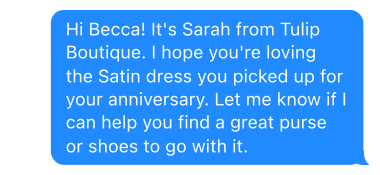
Not all outreach is equal, and this is where the platform earns the result. When the brand’s associates sent a personal, informed follow-up, it converted at 59%. If you are a VP of Retail or Director of CRM asking whether relationship-driven sales can hold up when the market turns, this clienteling success story is your answer.
03
The Results
14.55% conversion: 7x the benchmark during a sales decline
At the 2-5% industry benchmark, 100 clienteled customers yield two to five purchases. The same 100 clienteled customers yielded close to 15 for this global fashion brand. None of it came from more traffic or a better quarter. It came from the customers the brand already had.
The right customer, reached at the right time, converts. The 14.55% conversion rate Tulip Clienteling influenced for this brand came from customers it already had, not new demand.
1.6x average order value. The customers the brand already knew didn’t just buy more often, they spent more. Orders influenced through Tulip carried an average order value 1.6x the brand’s overall.
Growth while the market fell. Clienteling-driven sales grew even as sales in the broader business declined, because a managed relationship creates purchasing intent the market cannot erode.
Tulip Clienteling: the experience behind the numbers
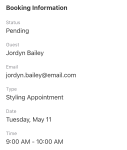
A 360° customer profile, in the associate’s hand
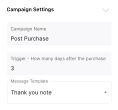
Outreach tools built for the store floor
The associate continuing the relationship in person
What these results mean for retail leaders considering clienteling
Relationship capital is real, and it is fragile. Left in one associate’s memory, the customer relationship leaves when they do. Made durable, it changes the sales interaction to one that compounds, regardless of the associate at the helm.
Every retail leader weighing clienteling lands on some version of the same hesitation: our customers are different, or the timing is not right. This brand grew the revenue it could control while the broader market dipped. Not through promotions, discounting, or traffic, but by acting on the customer relationships it already had. Regardless of market turns, retaining existing customers is a timeless growth strategy. Tulip Clienteling is the system powering those relationships.
See more success stories
2x
industry benchmarks
How Veronica Beard doubled industry benchmarks in under a year